


Busy Software

I--- Zooskool - Maggy May 2026

BUSY - is a powerful GST Compliant Business Accounting Software that keeps you on the top of your business by managing not just accounting but your complete business. Busy Accounting Software is an integrated business accounting and management software for Micro, Small & Medium Enterprises (MSMEs). With over 600,000 licenses sold in over 20 countries, it is one of the leading business accounting software in India, South Asia, Middle East Asia, and Africa.

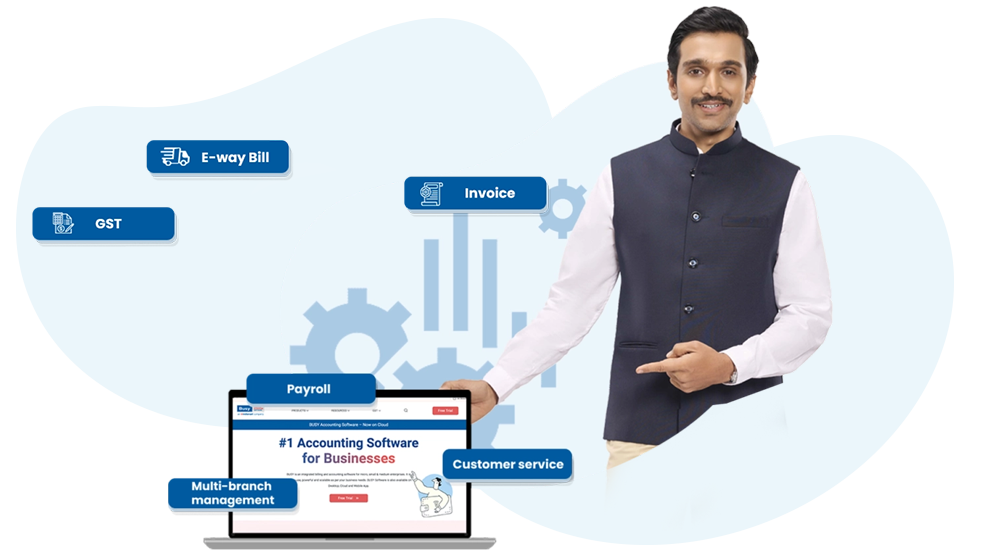
BUSY accounting software covers complete financial accounting or Bookkeeping, Advanced Inventory Management, GST Billing and GST Return Filing, MIS, Operations Management, Payroll, Customer Management, multi-location inventory, multi-currency, multi-tax capabilities, multi-branch management, order processing, payroll, MIS, Invoicing and much more, which helps you make informed decisions to scale your business. To cater to MSMEs' diverse needs, BUSY is offered in three different editions, namely, Basic, Standard & Enterprise, for businesses of different sizes and styles. Being a horizontal product, BUSY can be used in almost all types of Business Segments and Industry Verticals like FMCG, Retail, Manufacturing, Trading, Distribution, and Services. BUSY is sold and supported through its network of over 500 Channel Partners, thousands of Resellers, and Solution Partners all across India and abroad.
BUSY 21 / Busy Accounting Software is an integrated GST ready business accounting software for Micro, Small and Medium businesses. With over 6 Lac users in 20 countries, BUSY is one of the leading accounting softwares in India.
Products

Get BUSY 21 ACCOUNTING SOFTWARE products information online at your ease

View More

Downloads

Download all your BUSY 21 ACCOUNTING SOFTWARE from here

View More

What's New

BUSY 21 Edition
Launched

View More

BUSY 21 Basic Edition

Busy Accounting Software
For Micro & Small Business

(Traders/ Distributors)

INR 9,999 - 24,999 *

View Details

BUSY 21 Standard Edition

Busy Accounting Software
For Small & Medium Business
(Traders/ Distributors/ Retailers/ Manufacturers)

INR 14,999 - 39,999 *

View Details

BUSY 21 Enterprise Edition

Busy Accounting Software
For Large Business
(Traders/ Distributors/ Retailers/ Manufacturers)

INR 19,999 - 57,999 *

View Details

BUSY Subscription Edition

Busy Accounting Software
For All Businesses
(Non-GST Registered)

INR 4,999 - 24,999 *

View Details

BUSY Online Edition

Busy Accounting Software
For Large Business
(Traders/ Distributors/ Retailers)

INR 10,800/Year *

View Details

  * GST Extra as applicable. Above prices applicable for South Asia only.

Best Accounting Software for Growing Businesses

Manage your business seamlessly with BUSY, a simple yet effective accounting software.
Stay GST/VAT compliant with its user-friendly and advanced interface.


Financial Accounting

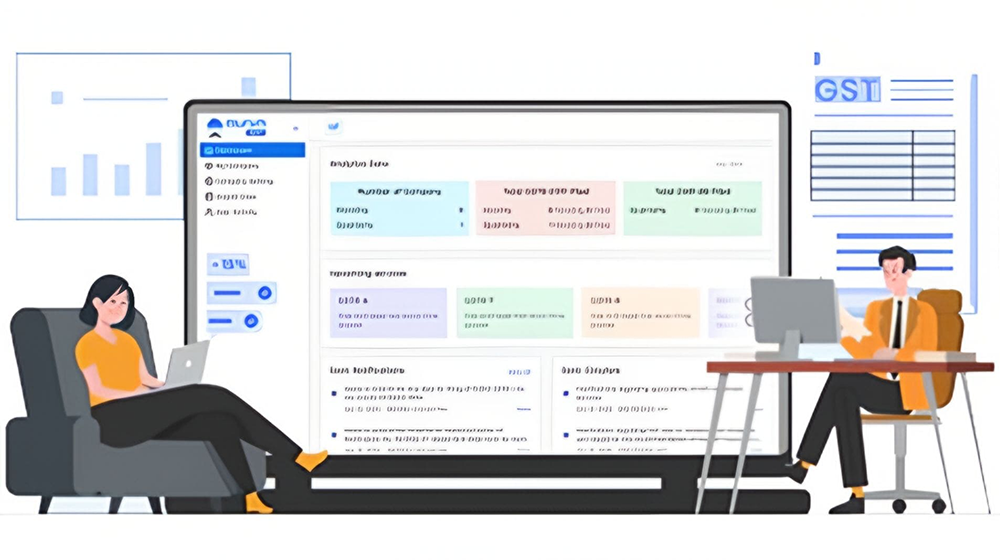
From Accounting Transactions like Vouchers to Ledgers to Trial Balance & Balance sheets, everything is available at the click of a button by using Busy Accounting Software

Inventory Management

Manage your inventory with additional details like Batch No. (with expiry), Serial Nos., and Parameters (Colour, Size, Style, etc.) Maintain multiple go-downs & locations smoothly with this Inventory management Software.

Configurable Invoicing

Create GST-compliant professional invoices easily as per business requirements. Maintain Party / Item-wise & Date-wise product prices with this GST Accounting Software.

Comprehensive GST Module

Manage GST from Billing to Return Filing with features like GSTIN Validation, GST Reconciliation, E-Way Bill & E-Invoice Generation, and other GST Accounting Software features.

Operations Management

Manage all your business operations like Indent, Quotation, Order, Challan, Invoicing, Receivable, Payable along with Payroll & Customer Support swiftly with this GST Billing Software.

Mobile App

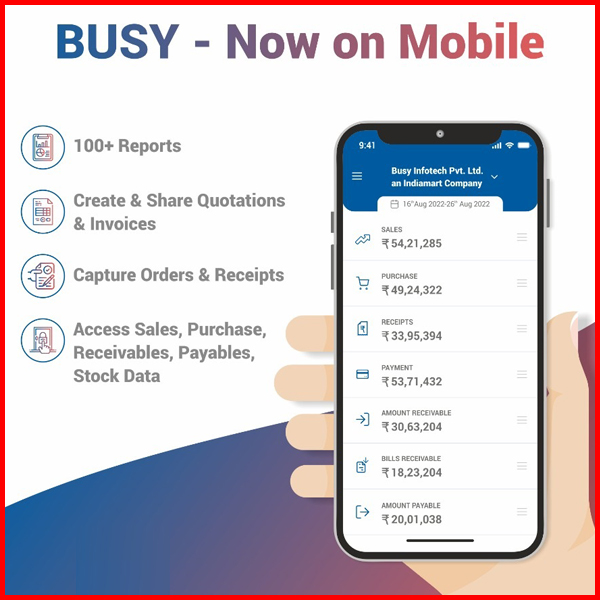
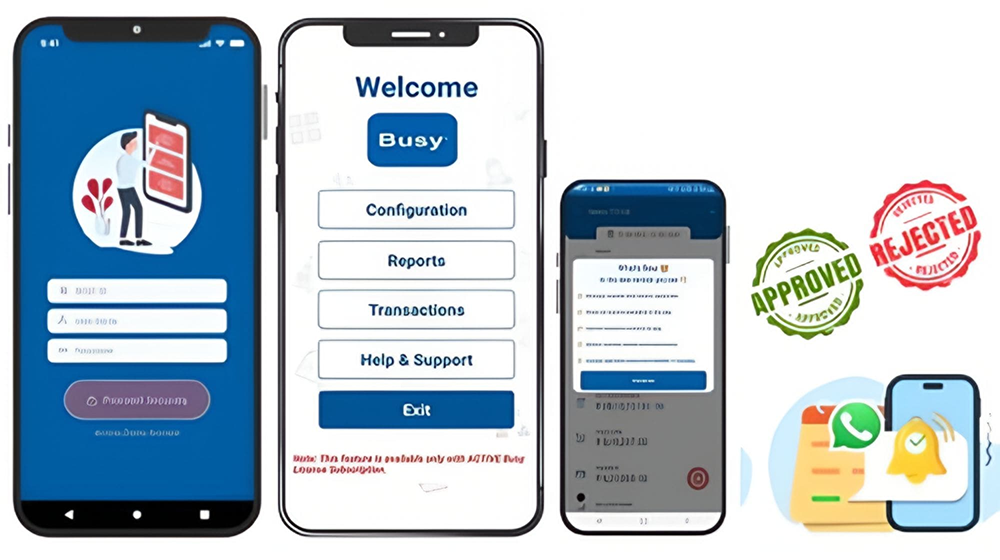
Stay connected with your business data anywhere and anytime directly through your Mobile Phone. Timely access to data with accounting software can help you make smart business decisions.

I--- Zooskool - Maggy May 2026

**The Art of Orchestral Scores** Orchestral scores have been the backbone of classical music for centuries, providing the blueprint for some of the most iconic and enduring works in the genre. From the sweeping symphonies of Beethoven to the cinematic soundscapes of John Williams, orchestral scores have played a crucial role in shaping the sound of classical music. In this article, we'll take a closer look at the world of orchestral scores, exploring their history, technique, and beauty. **A Brief History of Orchestral Scores** The concept of orchestral scores dates back to the 16th century, when composers began to write music for ensembles of instruments. However, it wasn't until the Classical period, with composers like Haydn, Mozart, and Beethoven, that the modern orchestral score began to take shape. These composers developed the symphony orchestra, which typically consisted of strings, woodwinds, brass, and percussion, and wrote complex scores that showcased the capabilities of their instruments. Over the centuries, orchestral scores have evolved to reflect changes in musical style, instrumentation, and technology. The Romantic era saw the rise of large-scale orchestral works, with composers like Mahler and Bruckner pushing the boundaries of instrumental color and texture. The 20th century brought new challenges and opportunities, with the advent of recording technology and the development of new instruments and playing techniques. **The Anatomy of an Orchestral Score** So, what exactly is an orchestral score? In simple terms, it's a written document that outlines the musical parts for each instrument in an orchestra. A typical orchestral score consists of: * **Title page**: The title of the work, the composer's name, and other relevant information. * **Instrument list**: A list of the instruments used in the orchestra, often with indications of their specific roles and ranges. * **Score**: The musical notation for each instrument, usually arranged in a specific order (e.g., strings, woodwinds, brass, percussion). * **Parts**: The individual sheets of music for each instrument, which are used by the musicians during performance. Orchestral scores can be incredibly complex, with multiple layers of musical information. Composers use a range of notation techniques to convey their ideas, including: * **Pitch notation**: The use of clefs, notes, and rests to indicate pitch and rhythm. * **Dynamic markings**: Indications of loudness and softness, such as ff (fortissimo) and pp (pianissimo). * **Articulation**: Markings that indicate how notes should be played, such as legato (smoothly) or staccato (short and detached). * **Expression markings**: Indications of phrasing, tempo, and other expressive qualities. **The Role of the Orchestral Score in Performance** The orchestral score is more than just a written document – it's a blueprint for performance. When a conductor and orchestra prepare to perform a work, they rely heavily on the score to guide them. Here's how the score is used in performance: * **Rehearsal**: The conductor and orchestra rehearse the work, using the score to learn the notes, rhythms, and other musical details. * **Interpretation**: The conductor and musicians interpret the score, bringing their own understanding and expression to the music. * **Performance**: The orchestra performs the work, with the conductor leading them through the score. **Famous Orchestral Scores** Some of the most iconic works in classical music are orchestral scores. Here are a few examples: * **Beethoven's Symphony No. 5**: One of the most recognizable opening motifs in music, Beethoven's Fifth Symphony is a masterclass in orchestration and dramatic contrast. * **Tchaikovsky's Swan Lake**: This beloved ballet score is a showcase for the orchestra's technical and expressive abilities. * **John Williams' Star Wars**: Williams' iconic score has become synonymous with the Star Wars franchise, featuring a range of memorable themes and motifs. **The Future of Orchestral Scores** As technology continues to evolve, the way we create, perform, and interact with orchestral scores is changing. Here are a few trends and innovations that are shaping the future of orchestral scores: * **Digital scoring**: Software like Finale, Sibelius, and Logic Pro have made it easier for composers to create and edit orchestral scores. * **Virtual instruments**: Advances in virtual instrument technology have enabled composers to create realistic simulations of orchestral instruments, reducing the need for live performances. * **Interactive scores**: Some composers are experimenting with interactive scores, which allow performers and audience members to engage with the music in new and innovative ways. **Conclusion** Orchestral scores are a vital part of classical music, providing a window into the creative process and a roadmap for performance. From the intricate notation systems to the iconic works that have shaped the genre, orchestral scores continue to inspire and captivate audiences around the world. Whether you're a composer, conductor, or music lover, the world No input data

Still Confused... Which Edition To Buy?

You can share your details with us and our BUSY experts will get in touch with you.
They will help you to choose the right software as per your business requirement(s).


Busy FAQs

In the modern business scenario, accounting operations can be managed efficiently with the help of GST accounting software. In terms of billing & invoicing, the automated mechanism of this software ensures that the calculations are aligned with utmost accuracy. Besides, customized invoice templates can be created in a single click with the dedicated function of this GST-enabled accounting software.

The GST billing software in India has been designed intuitively to simplify the traditional approach to managing accounting operations. With a unified system, this software improves the business’s productivity, eliminating the risk of fraud or security issues.

Small businesses are diversifying their verticals and adding up to their operations. However, the standard processes involving paperwork are time-consuming and may be subject to compliance issues. Keeping these considerations in mind, the GST accounting software has to be invested in by the small business. In addition, the GST updates enable the billing to be transparently generated by accounting professionals.

The BUSY Free Trial includes free access to our most popular BUSY features for 30 days from the creation of the first voucher date.

Anyone who has previously not signed up for BUSY 30 Day Free Trial is eligible.

No. Starting is free, you can experience the power of BUSY for 30 days.

At the end of your first 30 days, you can continue using your BUSY products by upgrading it to the Edition of your choice. BUSY has three editions under its ambit. It starts with Basic Edition at a price point of ₹9,000 + GST.

If you decide not to upgrade at the end of 30 days, the BUSY you have deployed will stop working, and you will only be able to access your data of that period. You can always come back to us to upgrade your BUSY.

View All FAQ's

© All Rights Reserved.
Back To Top i--- Zooskool - Maggy