×

This website uses cookies

While using this webshop cookies are used to store your webshop data temporarily on your computer. Cookies are not used for any other purpose.

High Performance ANSI C Compiler for Microchip AVR Microcontrollers

V4.06 release 1 October 2025

CodeVisionAVR

IDE - Automatic Program Generator - Graphic Library (Advanced) - ISP

Development Kit

CodeVisionAVR Advanced - LCD module with ATXMega A4U and a 2.4" or 9.0" LCD with Touchscreen - Optional AVR ICE

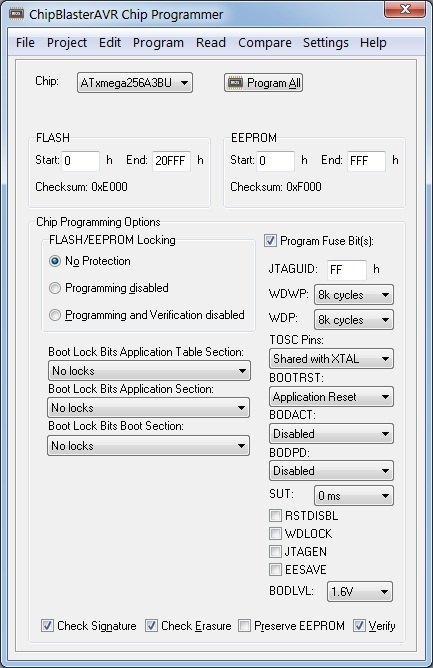
ChipBlasterAVR

Universal In-System Programming Software for the Microchip AVR family of microcontrollers

Support Extension

CodeVisionAVR includes 1 year of free updates and e-mail technical support. After this period purchase a support package to continue this service.

Quick order
Click on the blue buttons to quickly add a product to your cart.

We close the player not with a solved mystery, but with a perfect, high-definition image of failure. In the end, Zodiac in 1080p is the most terrifying horror film ever made—not because it shows the monster, but because it proves that even at maximum resolution, the monster is still blurry. And that blur is the truth. ~1,150 Recommended Viewing Environment: Calibrated 1080p display, DTS-HD MA 5.1 audio, lights off, notebook ready.

Furthermore, the Director’s Cut restores a key line of dialogue: “No one wants to admit they spent fifteen years chasing a ghost.” This thematic spine is often lost in the theatrical cut’s pacing. In high definition, the absence of resolution becomes palpable. The 1080p image, with its 1920x1080 pixel grid, offers a 2.35:1 aspect ratio that feels less like a cinema screen and more like a case file—a horizontal document waiting to be cross-referenced. To understand the 1080p H.264 version, one must understand Zodiac ’s revolutionary production pipeline. In 2007, Fincher shot the film on the Thomson Viper FilmStream Camera, a 1080p native digital camera. Unlike film purists (Spielberg, Tarantino), Fincher embraced digital not for cost, but for control . The Viper produced a RAW, uncompressed 4:4:4 RGB signal, which was then downsampled to 1080p for the Digital Intermediate.

Introduction: The Anti-Slasher In the pantheon of serial killer cinema, David Fincher’s Zodiac stands as a radical anomaly. Released in 2007 between the visceral punch of Panic Room and the philosophical angst of The Social Network , Zodiac rejects the cathartic violence of Seven or the stylish nihilism of Mindhunter . Instead, it offers a procedural obsession: a 162-minute autopsy of paperwork, typewriters, and cartographic obsession. The Director’s Cut (restored in 1080p H.264 encoding) does not add deleted scenes for spectacle; it refines the film’s core thesis: that the real horror is not the knife, but the unanswered question. This essay argues that the 1080p Director’s Cut of Zodiac is the definitive archival document of Fincher’s digital aesthetic, transforming the home viewing experience into an act of forensic investigation. Part 1: The Director’s Cut – Subtraction as Addition Unlike most “Director’s Cuts” that restore violent footage (see Aliens or Donnie Darko ), Fincher’s Zodiac Director’s Cut is remarkably restrained. The primary addition is approximately four minutes of material, most notably an extended sequence at the Toschi’s apartment where Robert Graysmith (Jake Gyllenhaal) obsessively organizes his evidence board. In 1080p, this scene becomes a meta-commentary on the viewer’s own position. The H.264 codec, with its block-splitting motion estimation, paradoxically mirrors Graysmith’s cognitive process: the digital compression breaks the image into discrete, searchable fragments, just as Graysmith breaks the Zodiac’s letters into linguistic shards.

Fincher is torturing the home-theater enthusiast. He gives us a perfect 1080p transfer—every fiber of Robert Downey Jr.’s paisley shirt, every grease stain on Mark Ruffalo’s notepad—only to deny us the one piece of data we want. The Director’s Cut emphasizes this cruelty. In the theatrical cut, the final title card stating “Arthur Leigh Allen died in 1992 before charges could be filed” fades quickly. In the Director’s Cut, it holds for an extra four seconds, forcing us to read it twice. The 1080p image ensures the text is razor-sharp, but the meaning remains agonizingly soft. The Zodiac -2007- Directors Cut - BluRay 1080p.H264 is not merely a home video release; it is the culmination of David Fincher’s digital philosophy. For the essayist, the film in this format functions as a case file that the viewer must assemble. The Director’s Cut adds not thrills, but obsession. The 1080p resolution provides not escape, but evidence. And the H.264 codec ensures that every frame is a document to be analyzed, replayed, and ultimately, found wanting.

If everything you try works, you aren't trying hard enough."

Gordon Moore

One thing a leader does is to remove the stigma of mistakes."

Gordon Moore

With engineering, I view this year's failure as next year's opportunity to try it again. Failures are not something to be avoided. You want to have them happen as quickly as you can so you can make progress rapidly."

Gordon Moore

Moore's Law - The number of transistors and resistors on a chip doubles every 24 months."

Gordon Moore

The technology at the leading edge changes so rapidly that you have to keep current after you get out of school. I think probably the most important thing is having good fundamentals."

Gordon Moore

Most of what I learned as an entrepreneur was by trial and error."

Gordon Moore

No physical quantity can continue to change exponentially forever. Your job is delaying forever."

Gordon Moore

If you'd asked me in 1980 what the big impact of microprocessors would be, I probably would have missed the PC. If you asked me in 1990 what was important, I probably would have missed the Internet."

Gordon Moore

Zodiac -2007- Directors Cut - Bluray 1080p.h264... May 2026

We close the player not with a solved mystery, but with a perfect, high-definition image of failure. In the end, Zodiac in 1080p is the most terrifying horror film ever made—not because it shows the monster, but because it proves that even at maximum resolution, the monster is still blurry. And that blur is the truth. ~1,150 Recommended Viewing Environment: Calibrated 1080p display, DTS-HD MA 5.1 audio, lights off, notebook ready.

Furthermore, the Director’s Cut restores a key line of dialogue: “No one wants to admit they spent fifteen years chasing a ghost.” This thematic spine is often lost in the theatrical cut’s pacing. In high definition, the absence of resolution becomes palpable. The 1080p image, with its 1920x1080 pixel grid, offers a 2.35:1 aspect ratio that feels less like a cinema screen and more like a case file—a horizontal document waiting to be cross-referenced. To understand the 1080p H.264 version, one must understand Zodiac ’s revolutionary production pipeline. In 2007, Fincher shot the film on the Thomson Viper FilmStream Camera, a 1080p native digital camera. Unlike film purists (Spielberg, Tarantino), Fincher embraced digital not for cost, but for control . The Viper produced a RAW, uncompressed 4:4:4 RGB signal, which was then downsampled to 1080p for the Digital Intermediate.

Introduction: The Anti-Slasher In the pantheon of serial killer cinema, David Fincher’s Zodiac stands as a radical anomaly. Released in 2007 between the visceral punch of Panic Room and the philosophical angst of The Social Network , Zodiac rejects the cathartic violence of Seven or the stylish nihilism of Mindhunter . Instead, it offers a procedural obsession: a 162-minute autopsy of paperwork, typewriters, and cartographic obsession. The Director’s Cut (restored in 1080p H.264 encoding) does not add deleted scenes for spectacle; it refines the film’s core thesis: that the real horror is not the knife, but the unanswered question. This essay argues that the 1080p Director’s Cut of Zodiac is the definitive archival document of Fincher’s digital aesthetic, transforming the home viewing experience into an act of forensic investigation. Part 1: The Director’s Cut – Subtraction as Addition Unlike most “Director’s Cuts” that restore violent footage (see Aliens or Donnie Darko ), Fincher’s Zodiac Director’s Cut is remarkably restrained. The primary addition is approximately four minutes of material, most notably an extended sequence at the Toschi’s apartment where Robert Graysmith (Jake Gyllenhaal) obsessively organizes his evidence board. In 1080p, this scene becomes a meta-commentary on the viewer’s own position. The H.264 codec, with its block-splitting motion estimation, paradoxically mirrors Graysmith’s cognitive process: the digital compression breaks the image into discrete, searchable fragments, just as Graysmith breaks the Zodiac’s letters into linguistic shards.

Fincher is torturing the home-theater enthusiast. He gives us a perfect 1080p transfer—every fiber of Robert Downey Jr.’s paisley shirt, every grease stain on Mark Ruffalo’s notepad—only to deny us the one piece of data we want. The Director’s Cut emphasizes this cruelty. In the theatrical cut, the final title card stating “Arthur Leigh Allen died in 1992 before charges could be filed” fades quickly. In the Director’s Cut, it holds for an extra four seconds, forcing us to read it twice. The 1080p image ensures the text is razor-sharp, but the meaning remains agonizingly soft. The Zodiac -2007- Directors Cut - BluRay 1080p.H264 is not merely a home video release; it is the culmination of David Fincher’s digital philosophy. For the essayist, the film in this format functions as a case file that the viewer must assemble. The Director’s Cut adds not thrills, but obsession. The 1080p resolution provides not escape, but evidence. And the H.264 codec ensures that every frame is a document to be analyzed, replayed, and ultimately, found wanting.

ChipBlasterAVR

A Universal In-System Programming Software for the Microchip AVR family of microcontrollers

  • Compatible with most AVR development tools
  • Supports projects
  • Supports all AVR microcontrollers
This product includes 1 year of free updates and e-mail technical support. After this period you can purchase 'ChipBlasterAVR Support' to continue to receive free updates and support.

This is a download only product, nothing will be shipped to you. A free evaluation version is available.

ChipBlasterAVR is (C) Copyright 1998-2020 by HP InfoTech S.R.L., All Rights Reserved.
YOUR WEBSHOP CART

Fill in the Form - Check Your Cart - Pay - Enjoy CodeVisionAVR

Invoice info:

Licensee info:

Your Cart Contents:

Total:
Shipping:
Total incl. VAT:
Your creditcard will always be charged in Euro. Prices in other currencies are indicative.
The Pay button is only available after you filled in all required fields.

×


CodeVisionAVR FAQ

How will I receive my license?
You will receive your download link, install pasword and license ID, with a delay that may be up to 12 hours, from HP Info Tech by e-mail. Please also check your e-mail clients Junk folder as the e-mail might end up there. If you ordered the development kit, the hardware will be shipped to you and you will get shipment information.

How can I download CodeVisionAVR?
You can try the product before purchasing by downloading the CodeVisionAVR Evaluation V4.06: Free, 4kbytes code size limited version. PCF8563, PCF8583, DS1302, DS1307, DS2430, DS2433 libraries are not included. Includes also the Evaluation version of the LCD Vision font editor, with disabled saving of the generated font C source code.
The paid version can be downloaded @ CodeVisionAVR V4.06. This version does require an activiation code which is send to you after your purchase. This commercial version also includes the full LCD Vision font editor. The Advanced license is required to use LCD Vision and the color graphic TFT LCD libraries.

Where can I find the CodeVisionAVR User Manual?
Just download it: cvavrman.zip

How do I setup the software?
CodeVisionAVR V3 is designed to be used both in its own IDE and also as an Extension in Atmel Studio 7 or the older 6.2.1563. It is compatible with all Windows® versions down to XP. For the Atmel Studio Extension to be installed correctly, Atmel Studio must be already present on the computer, before the CodeVisionAVR installer is launched.
Note that while installing and using CodeVisionAVR you must be logged in as Administrator.
You must uninstall any Atmel Studio version older then 6.2.1563 and remove all remaining files in C:\Program Files (x86)\Atmel BEFORE running the CodeVisionAVR installer.

I get a warning from my virus scanner while installing CodeVisionAVR !
CodeVisionAVR is protected by WinLicense from Oreans Technologies. This protection may trigger false alarms in some antivirurses like BitDefender, ESET, AVAST or AVG, preventing CodeVisionAVR from being executed. In such cases you need to add the whole CodeVisionAVR installation \BIN folder to the antivirus file exclusion list.

Is Atmel Studio required?
No it is not. You can use CodeVisionAVR in its own IDE. For debuging you can also use the AVR Studio 4.19 debugger.

I want to use an older version of CodeVisionAVR
All previous versions of CodeVisionAVR can be downloaded, just ask us for the correct download link. Mind you that each version has a different install password. Please keep a record of the install password(s) which we send you. If you've lost your install password feel free to ask us. You can use the contact form.

Will I receive an invoice for my purchase?
Invoices are send by e-mail for all purchases. It might take a few weeks before you receive your invoice.

Privacy
Our shop does not store any information in an online database. That's why you can not use a login and have to enter your invoice data for each purchase. Your address is only used to send you an invoice. Your e-mail address is used by UVee to send you a purchase confirmation, and by HP Info Tech to send you the license. HP Info Tech will store your address to keep track of your license. On simple request (use the contact form below) UVee will erase all your data, or send you a copy of all your data records.
While using this webshop cookies are used to store your webshop data temporarily on your computer.

Payment with Stripe versus PayPal
Our new webshop uses the services of Stripe to handle your payments. Stripe supports all common creditcards, but also Apple Pay and Google Checkout in selected regions. It also supports local bank cards (region dependant). PayPal recently changed their payment system which resulted in higher costs for both you and us.

What about shipping costs?
CodeVisionAVR and ChipBlasterAVR are download only products, no shipping costs are charged.
All other products are shipped with bPost (first class Mail) and we charge €9.90 for EU destinations and €19.90 for all other destinations. You will get a tracking number once your order has been shipped. Shipping time varies depending on the location, EU destinations usually arrive within 5 working days. Longer distance shipments might take longer. If you want us to send your order with your preferred carrier (on your account), add your carrier account number in the comment field, we'll refund you the charged shipping costs.

Are there any export restrictions
We do not sell to residents of Iran, North Korea, and Russian companies with military subsidaries

CONTACT

Lets get in touch. Send us a message.